
Catch a Stingray with a $20 Hotspot
License plates aren’t the only thing being tracked. Cell-site simulators quietly grab your phone’s identity and location — and the EFF built a tool to catch them.
The Flock fight is about your car. But it’s worth zooming out: the same warrantless, mass-tracking logic shows up in a different gadget aimed at the phone in your pocket. The good news is the same too — there’s a cheap, open-source, legal way to catch it.
What’s a “Stingray”?
An IMSI catcher — also called a cell-site simulator or “Stingray” — is a device that impersonates a cell tower. Your phone, trying to be helpful, connects to the strongest “tower” nearby; the fake one captures your phone’s unique identifier (its IMSI) and location, and can sometimes force your phone down to insecure 2G to make it easier to monitor. They’ve been deployed by law enforcement and others, frequently in secret and without a warrant. It’s the cellular cousin of a Flock camera: a quiet, dragnet way to answer “who was here, and when.”
Rayhunter: the IMSI-catcher catcher
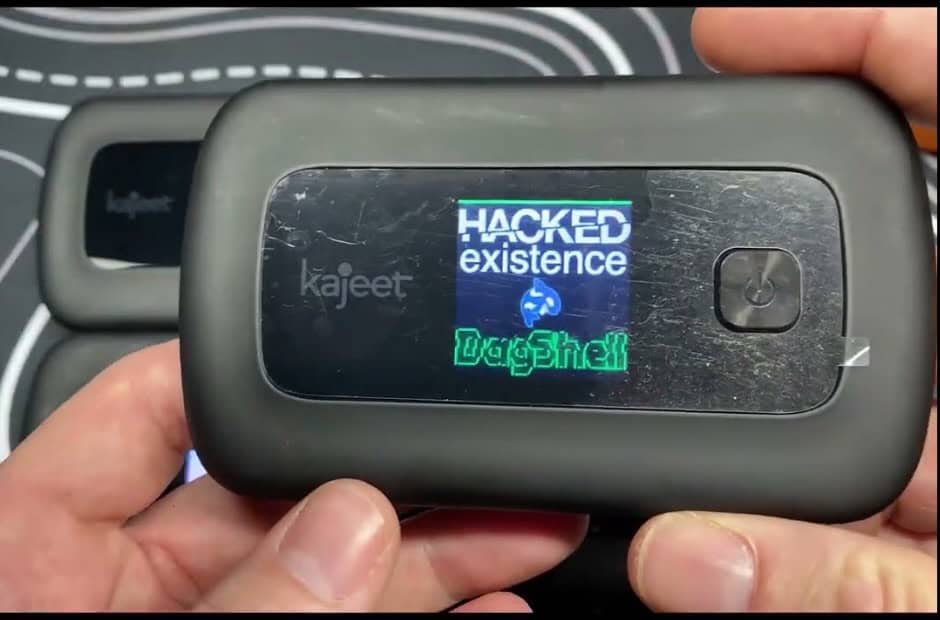
The Electronic Frontier Foundation built Rayhunter, an open-source tool that detects these simulators. It was designed to run on a cheap mobile hotspot — the Orbic RC400L, around $20 — and community work has added support for some other devices. It watches the hotspot’s own cellular control traffic for the behavioral tells of a simulator (suspicious tower behavior, forced downgrades) and flags anything fishy through a simple local web page. EFF built it specifically to be installable “regardless of your level of technical skills.” (EFF intro.)
Build one
The short version: get a supported hotspot (the ~$20 Orbic RC400L is the classic choice), then follow EFF’s step-by-step installation guide. Once it’s running, you carry it (or leave it somewhere) and it quietly monitors; if it sees a likely IMSI catcher it warns you and saves a capture you can review or share with researchers. EFF’s docs walk through acquiring the device, flashing Rayhunter, and reading the results.
Why it’s in the nerd section
It’s the exact same ethos as our Flock detector: inexpensive hardware plus open-source software, turned into a way to make invisible surveillance visible. Whether it’s a camera on a pole logging your plate or a fake tower in a van logging your phone, the principle DeFlockILM stands on is the same — you shouldn’t be tracked, en masse, without a warrant. Building one of these is a small, legal act of pulling the surveillance into the daylight.
EFF states it believes running Rayhunter does not violate U.S. law — you’re passively monitoring your own device’s traffic, not interfering with anyone’s network. As always, that’s general information, not legal advice; if you’re outside the U.S. or unsure, consult a local attorney. Follow EFF’s official guide, not knock-off instructions.
You’re not a suspect. So stop being tracked like one.
It takes one minute. Add your name — then tell the officials who represent you to take the cameras down.