
A Federal Judge Called Flock ‘Indiscriminate Mass Surveillance’ — and Found It Unconstitutional
On October 1, 2026, a federal court in Oklahoma did something almost no court had done before: it held that running a license plate through Flock’s network was an unconstitutional search, and suppressed everything that followed.
For years, the standard government answer to Flock’s license-plate dragnet has been simple: there’s no expectation of privacy on a public road, so scanning and logging your car isn’t a “search” at all. On October 1, 2026, a federal judge in Oklahoma rejected that answer — and suppressed the evidence.
In United States v. Kyle, No. 4:26-cr-00189-SEH (N.D. Okla.), U.S. District Judge Sara E. Hill held that a deputy’s use of Flock to pull a month of a driver’s location history was an unconstitutional warrantless search under the Fourth Amendment, and granted the defendant’s motion to suppress. Read the court’s Opinion and Order (PDF).
What happened
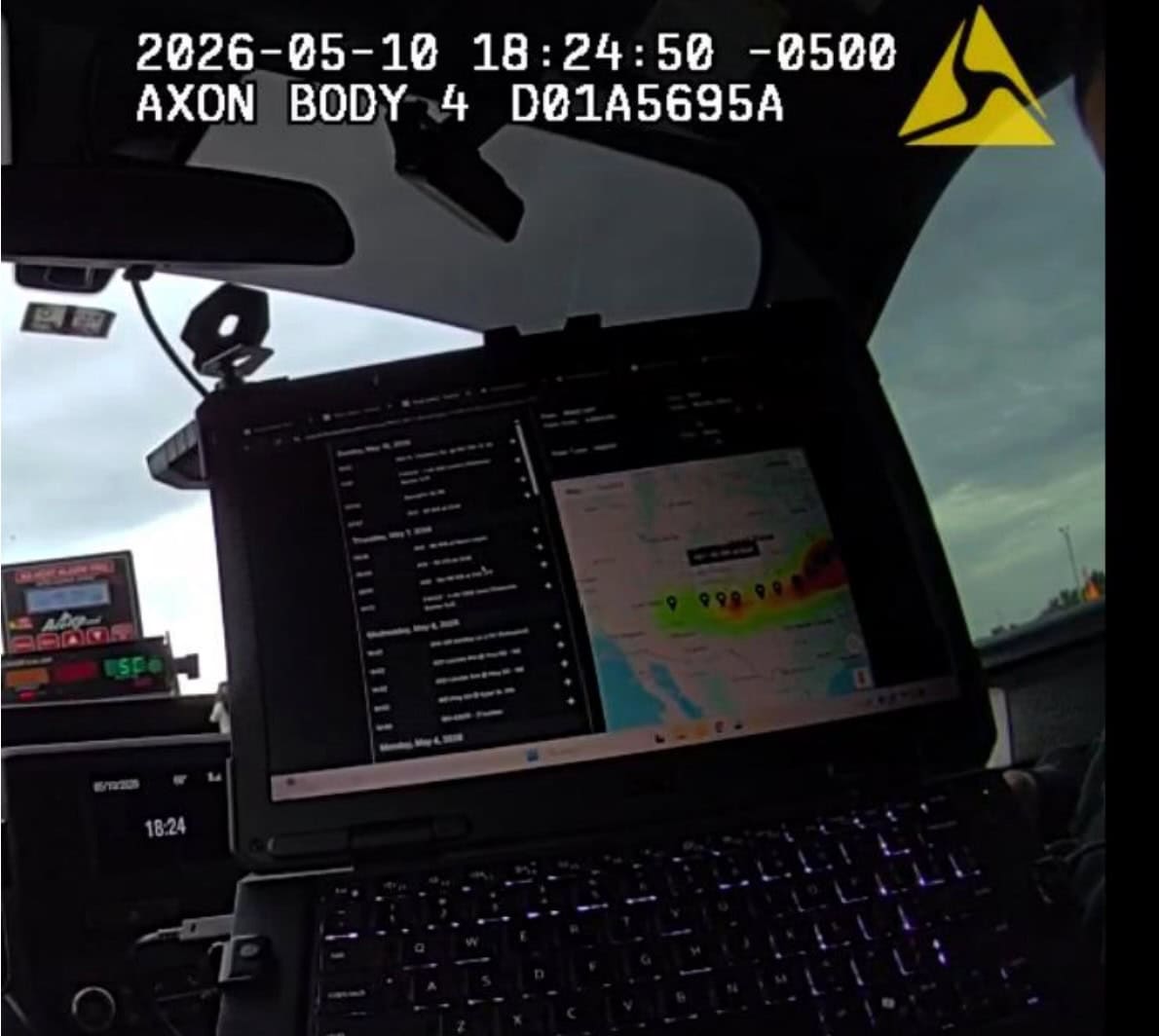
A Tulsa County deputy, Freddie Alaniz, was parked beside a highway when he saw a Mazda SUV with a California license plate. By his own account, he pulled out to follow it “for no apparent reason other than the fact that it had a California license plate,” and ran the plate through two ALPR systems he had access to — Flock and VehicleManager. He logged his reasons for the queries as “traffic violation” and “investigation.”
That one query returned an entire month of location data — more than fifty sightings of the car across multiple states. The ALPR hit led Alaniz to extend the stop, call a drug dog, and ultimately search the car.
The three rulings
The court addressed each step. It found the traffic stop was valid at its inception (the driver was following too closely). But it found the deputy had no reasonable suspicion to extend the stop. And then it reached the part that matters for everyone who drives past a Flock camera: the ALPR search itself was unconstitutional.
Why the ALPR ruling is a big deal
Judge Hill was candid that she was breaking from the pack. “Nearly every court examining the issue to date,” she wrote, has held that ALPR use is not a search — including three other Oklahoma federal courts. She disagreed. The older case the government leans on, United States v. Knotts (1983), involved a primitive radio “beeper,” not a nationwide camera network; the defendant in that very case had warned that the government’s theory would allow “twenty-four hour surveillance of any citizen of this country,” and the Supreme Court answered that if “dragnet type law enforcement practices” ever arrived, “there will be time enough then” to decide.
That time, Judge Hill concluded, has arrived. Reading Knotts alongside the Supreme Court’s modern location cases — Carpenter v. United States (2018) and this year’s geofence decision in Chatrie — she held that people have “a reasonable expectation of privacy in the whole of their physical movements,” and that Flock-style ALPR is exactly the kind of persistent, suspicionless tracking those cases protect against:
“This is a type of indiscriminate mass surveillance. It is not targeted on a single individual… It is a tool that collects information about all vehicles that pass by any network-connected camera at all times, and it serves up the information to law enforcement on demand.”
— United States v. Kyle, Oct. 1, 2026
She put the privacy intrusion in plain terms. We might expect a friend to say they saw us out driving last week, she wrote — but not for anyone, “especially not law enforcement,” to say:
“Hey, I have been following your car for the last 30 days, and here is a detailed log of every place your vehicle has been with supporting photographic evidence. I am also going to share this information with law enforcement throughout the country so they know your whereabouts, too.”
The court noted what a plate network can quietly reveal — trips to “the fertility clinic,” “a liquor store or casino,” “which doctor someone goes to or what lawyer’s office someone visits” — and asked the question at the heart of it: “why is it the government’s business where everyone goes all the time?” Her answer: “It is not too much to draw the line at indiscriminate mass surveillance.”
Because the only reason for the search was an out-of-state plate — no warrant, no probable cause — and the government identified no exception to the exclusionary rule, everything obtained after the ALPR query was suppressed as fruit of the poisonous tree.
Read it straight: what this is, and what it isn’t
We’ll say plainly what the ruling is, because overstating it would do the cause no favors. This is a federal district-court order — persuasive authority, not binding precedent, and it can be appealed. And as the judge herself acknowledged, it runs against the current weight of authority. What makes it important is precisely that: it is a careful, thoroughly reasoned opinion that gives courts, defense lawyers, and policymakers a roadmap for the other conclusion — that running a plate through a nationwide network is a search that needs a warrant.
One detail that should sound familiar
The deputy logged one of his search reasons as “traffic violation.” North Carolina law is explicit that data obtained under the state ALPR statute “shall not be used for the enforcement of traffic violations” (N.C. Gen. Stat. § 20-183.31(b)). It’s the same category we’ve been asking Cape Fear agencies about — and a reminder that the “reason” box on a Flock search is where accountability starts.
Why it matters here
The companies and the agencies that run these cameras insist the only issue is bad apples and better auditing. This ruling reframes it. A federal judge looked at the system — cameras on poles, cameras on patrol cars, a continuously updated location history for every vehicle, shared nationwide — and called it what it is. The cure for mass surveillance isn’t a tidier dragnet. It’s drawing the line.
Related: what the Supreme Court’s Chatrie geofence ruling means for Flock · the ALPR cases working through the courts.
You’re not a suspect. So stop being tracked like one.
It takes one minute. Add your name — then tell the officials who represent you to take the cameras down.