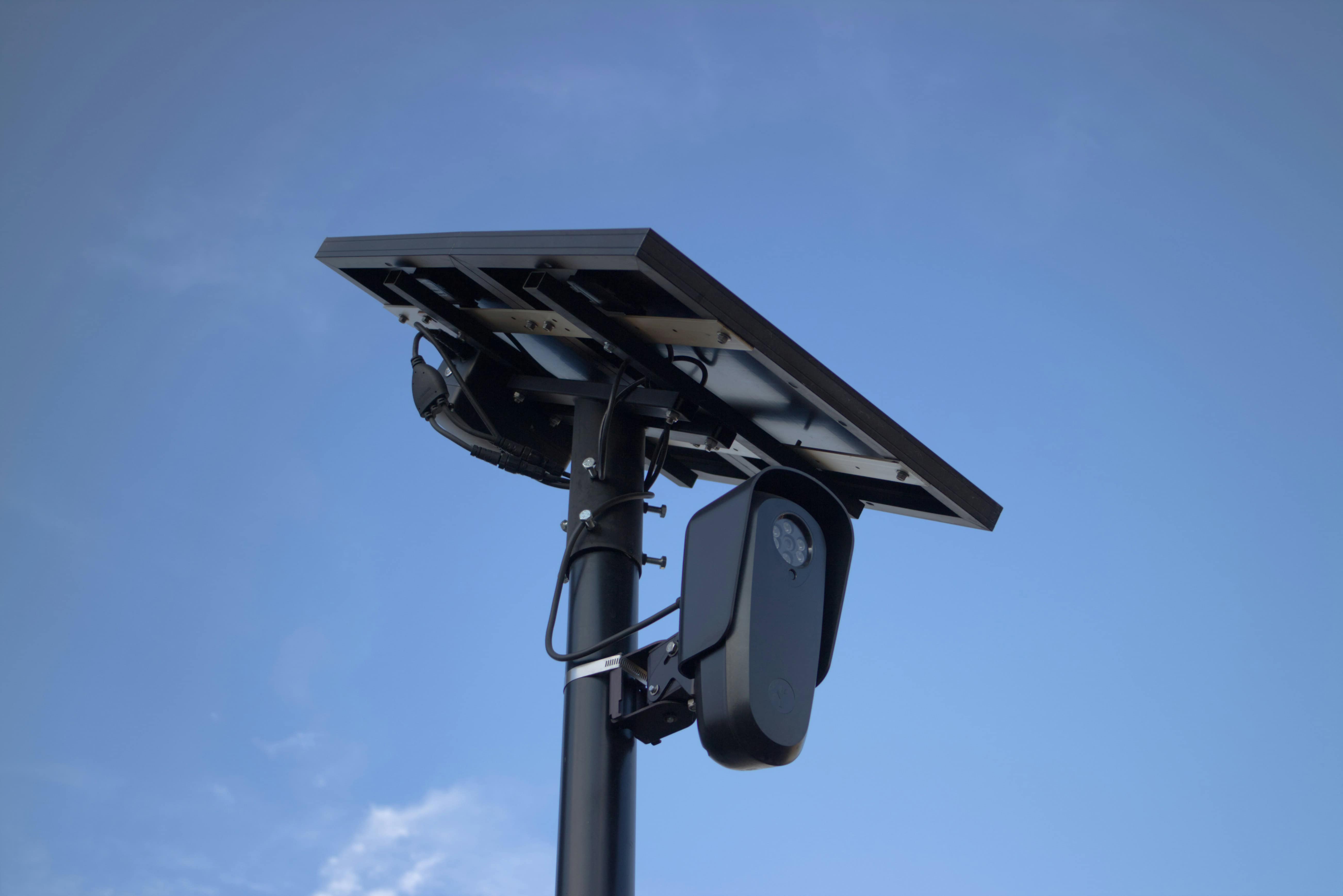

How to Spot a Flock Camera
Most people drive past them every day without a second glance. Here’s how to recognize a Flock camera — and once you can, you won’t be able to stop seeing them.
Over and over in our local comments, people said the same thing: “I didn’t even know what they looked like.” That’s by design. These cameras blend into the roadside clutter we’ve all learned to ignore. So here’s your field guide.
What to look for
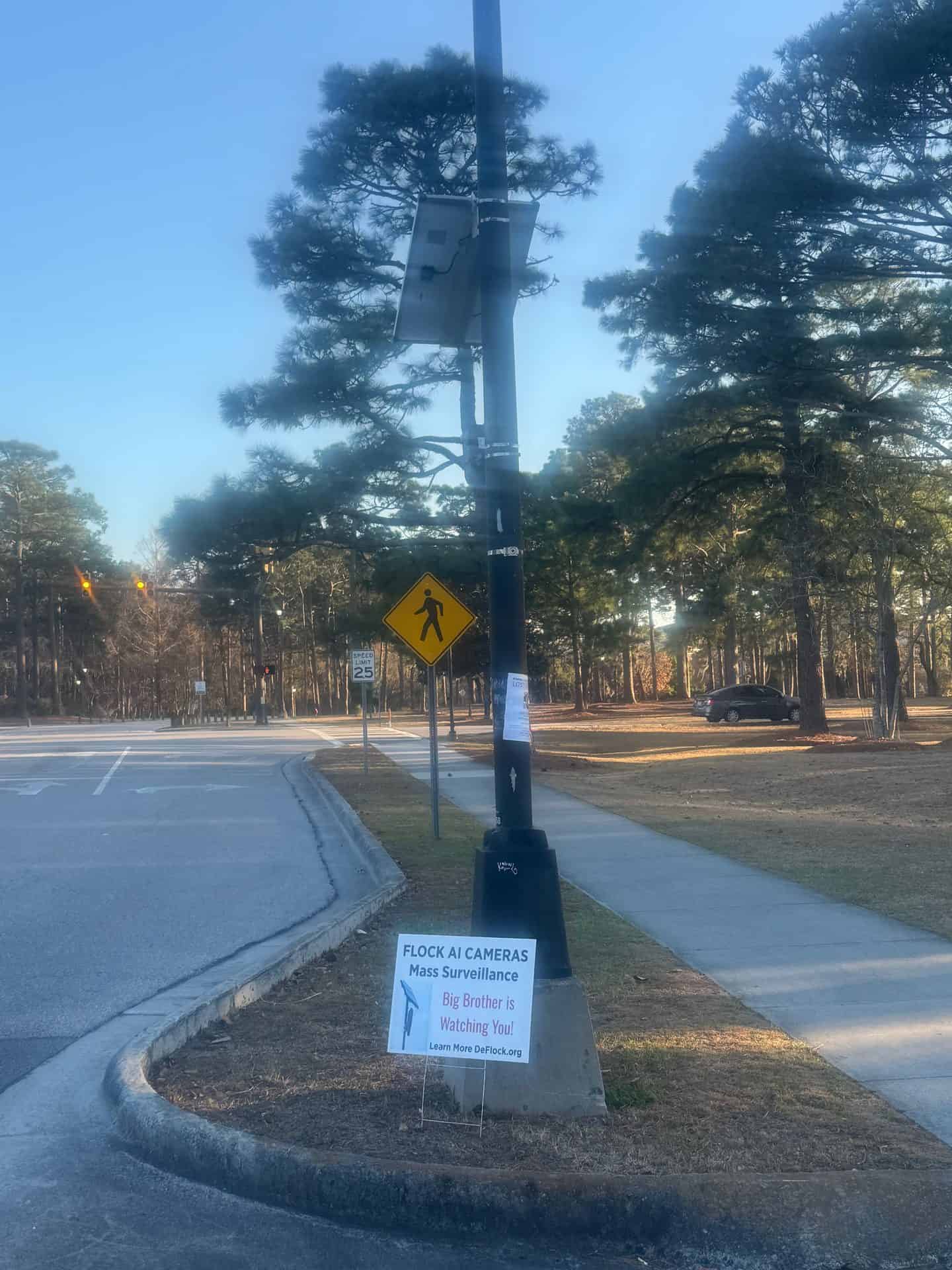
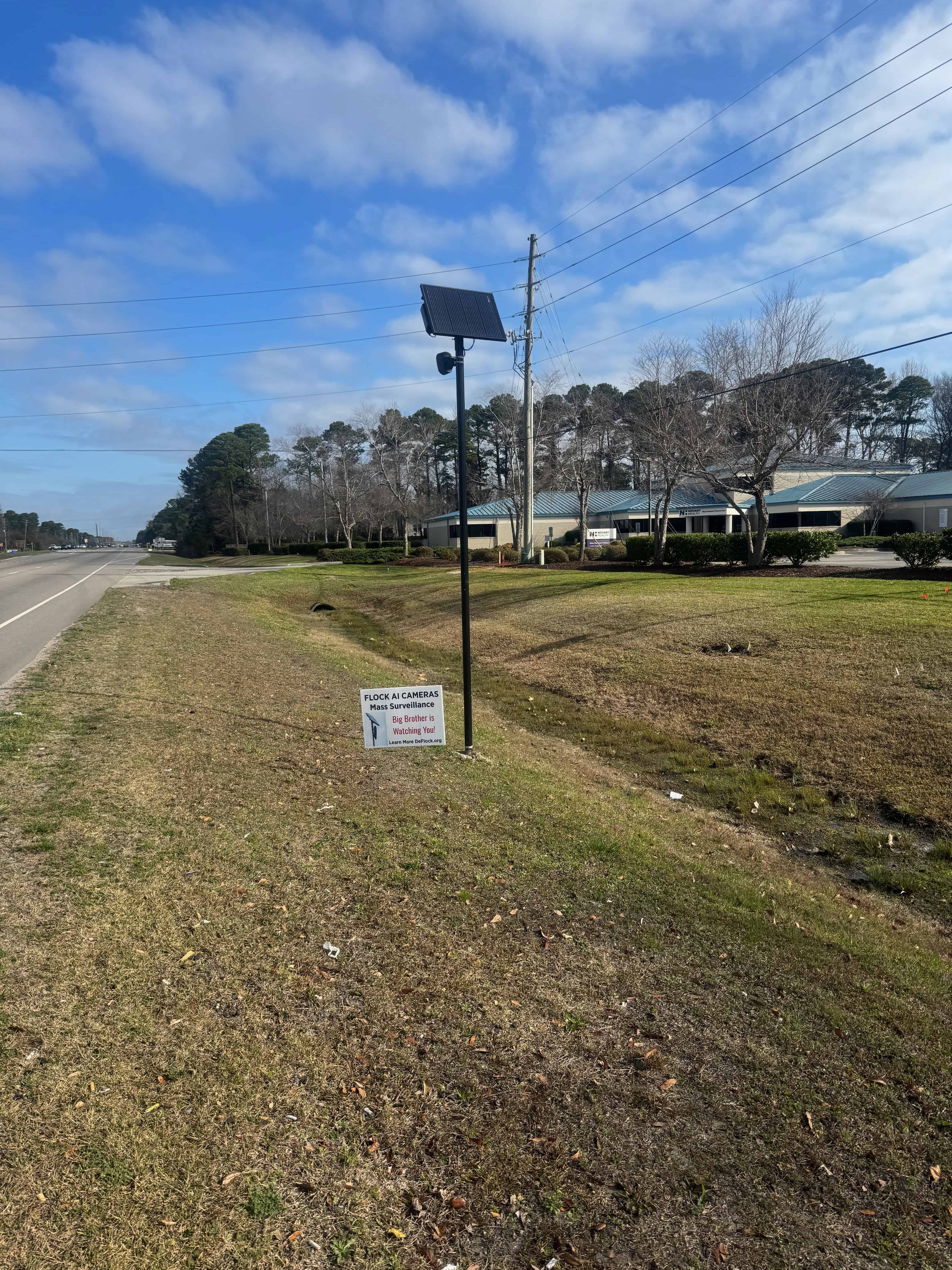
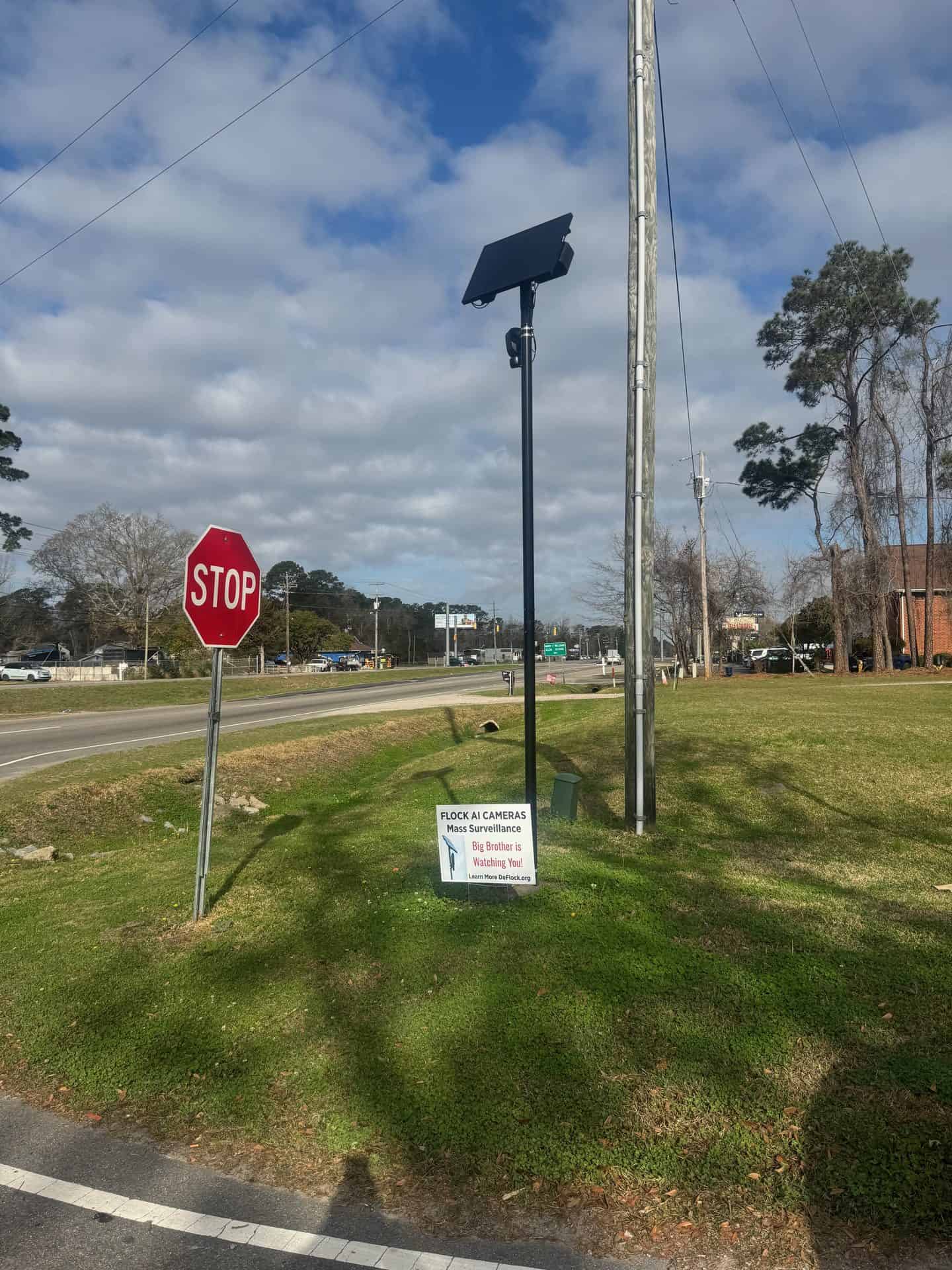
- A slim pole — often a few feet to head height, sometimes on its own, sometimes strapped to an existing post.
- A small solar panel on top (many Flock units are solar-powered, so they can go up almost anywhere without wiring).
- A boxy black camera head below the panel, usually pointed at the road to catch passing plates, often with a dark infrared lens for night capture.
- Location, location: intersections, on-ramps, and the entrances to neighborhoods, shopping centers, parking lots, and parks. Anywhere your car has to pass to come or go.
People miss them because at a glance they resemble a speed-display sign or a traffic sensor. They’re not. The national DeFlock project keeps a helpful visual guide at deflock.org/identify.
What they look like here in Wilmington
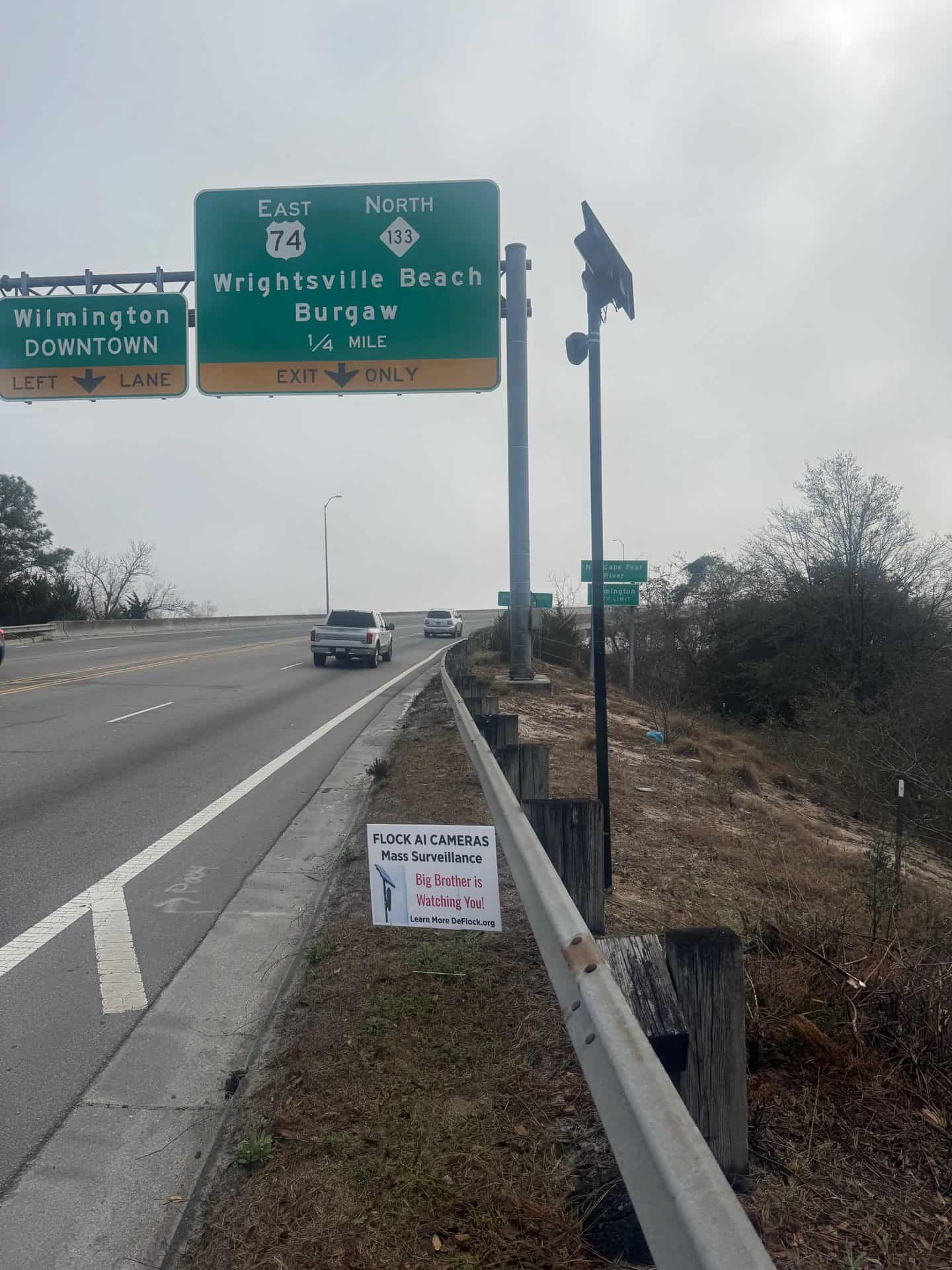
These are real Flock cameras photographed around Wilmington and New Hanover County. Notice the same pattern every time: a slim black pole, a solar panel near the top, and a small camera head below — planted right where traffic has to pass. (A few of these happen to have a warning sign nearby — but most Flock cameras give no notice at all, so once you learn the shape you won’t need one.)
Remember: it’s not just your plate
Once you spot one, know what it’s doing. As we covered in “No Plate? No Problem,” these cameras capture your car’s make, color, stickers, and racks — a searchable “fingerprint,” not just a tag.
Hunting them on purpose
Once you can recognize a housing, spotting them stops being accidental. The volunteers who do this deliberately — camera hunters — drive fixed routes and log what they find to the open DeFlock map, which is the only public inventory that exists in most of North Carolina. If you want to hunt with hardware rather than eyes, we have a kit guide.
When you spot one
Note the location, add it to the DeFlock map so the public has a count the government won’t give us, and tell a neighbor. Awareness is the first step — you can’t push back on what you can’t see.
You’re not a suspect. So stop being tracked like one.
It takes one minute. Add your name, then tell your county commissioners to cancel the Flock contract.